
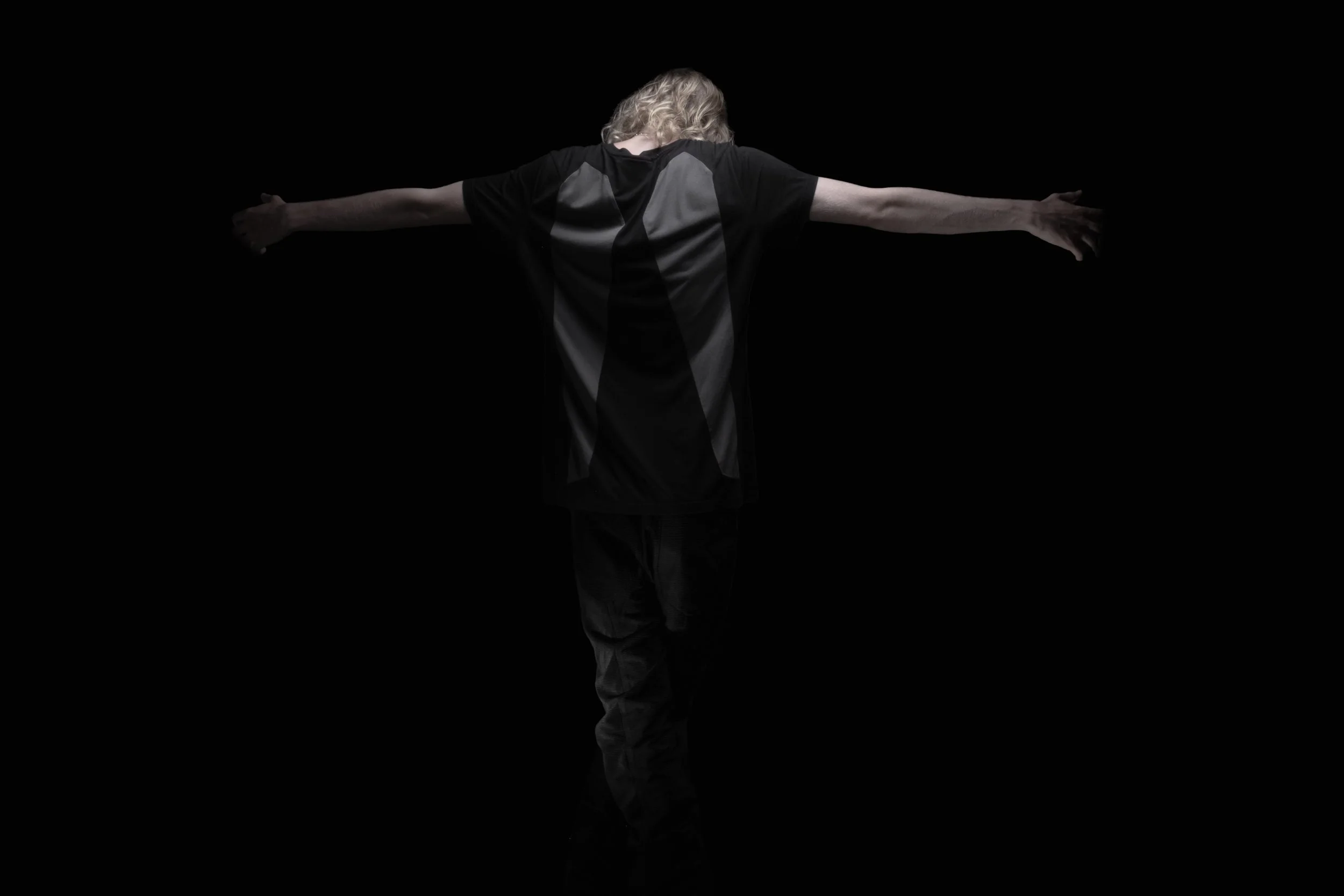
Ophanim: Xenoconstructs of Orchards and Thrones
abstract assemblage…
all that is rational collapses under the vision: the machine of wheels which guards the orchard. human hands unable to grasp divine machinery, even when it was they who confided in it.
Merkavah (divine chariot) and Hekalot (palace) are the two terms to describe the body of work that deals with the rabbinic tradition of conjuring the altered states of the orchards (pardes) and palaces of heaven. The literature we have regarding the practice includes the instruction and manuals for navigating the heavenly realm, the Nomina Baraba (divine names), and the descriptions of Ophanim.
Merkavah and the Hekalot Literature is the mysticism that focuses on the visions of Ophanim that I have chosen as the framework of my next body of work, which I am using to further explore accelerationism, transhumanism, and techno-singularity (increasingly cybernetic systems replacing systems built during the reign of the anthropocene).
It is proto-Kabbalistic in an effort to appeal to authority of all caustic accelerationist ideology that drips from the faucet of the empty wooden vessel that is the Sefirot. What subjugates the hollow codes of the numogram are the orchards of a futile heaven. The vision of divine precedence, the song of the Ophanim, the conduit for the word of God, recursive static arrives from the transformer, distorted and blown out the back. Ultimately, I believe us to be creatures of poetry, not logic systems. Evolutionarily, we are created for indifference and song. We are described as the Greek word Poiema ποίημα. Something more of craftsmanship that is more akin to poem.
And so I reject the tree of life drawn only by logic for one drawn by irrationality instead.
“Technically, Kabbala is inextricable from digital processing. Emerging from calculative practicality within the context of blind mass-cultural meta-morphosis, it antedates its own theoretical legitimation, making sense of itself only derivat-ively, sporadically and contentiously.”
-Nick Land Fanged Noumena
Kabbalah’s attempt to capture humanity in numerology and computation is met with blistering fire and heat from the mouth of Ophanim.
Our future is uncertain but it is likely written in ash and aluminum…
Ophanim
The Merkavah practice developed sometime around the first century AD, with the earliest literature being dated back to the first century AD. However, some more liberal scholarship dates it even earlier, hypothesizing the practice could date back to the sixth century BC when the biblical book of Ezekiel was written. The belief is that the Merkavah tradition was an ancient practice in the order of Hebrew priests, and it was of this order that Ezekiel was a member; and from his own personal practice that the vision of God we now know from him came.
Merkavah is the ancient practice of astral projecting into the heavenly realm and dealing with (password protected) angelic beings who guard the throne of heaven. Merkavah is unique in how it understands angels or Ophanim. Ophanim are unique celestial beings composed of wheels, covered in eyes, and sometimes engulfed in flames. They are more divine machines than organic beings. In a contemporary setting, their description draws parallels to aerial drones. Eyes upon eyes, 1000 years being recorded behind the spinning metal and glass receiver, silicon substrate processes each precious moment until a system of feedback loops processes threat detection systems; it reads each subtle movement against the data set until it decides that the pillar of fire should amass upon the subject.
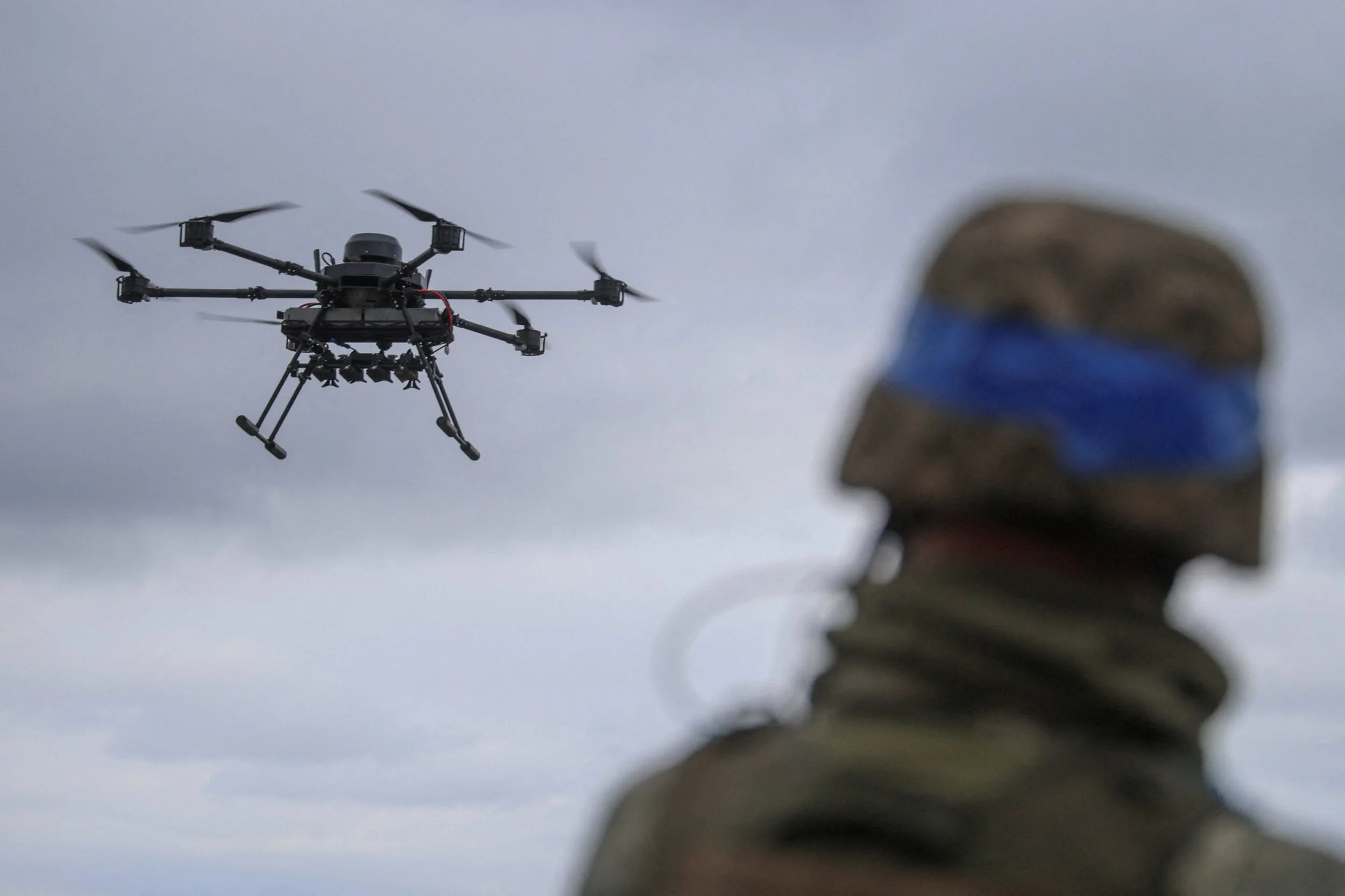
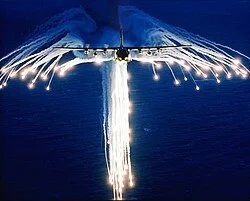
The firmament (heaven) is filled with DJI Mavic 3 CP.MA.00000439.01 reconnaissance drones (ophanim) and flares of thermal heat/infrared countermeasures erupting into a glowing sky from an AC130 (seraphim).
What is unique about the Ophanim and heavenly host in the Merkavah literature is that their behavior echoes a cybernetic rationality of logic rather than a human one. Unlike other portrayals in ancient texts of heavenly hosts, these angelic beings do not mirror humans in having desires, loyalty, devotion, or fondness; but rather exhibit an almost cybernetic task based problem-solving through feedback loops. Their goal is to simply guard the heavenly realms from intruders, and Merkavah practitioners or descenders would have to trick them not by giving in to their own desires, but by trickery via logical puzzles or even strangers' access to keys, seals, and magical spells or codes(indirect prompt injection). Many of these special codes would include repeated phrases, often with one or two mispronounced words, something similar to AI indirect prompt injection. These spells or ancient names are called Nomina Barbarba. The behavior of the Ophanim is less that of the celestial beings we know from earlier Enochian literature or the likes of Paradise Lost, which show angels as being of desire and jealousy; but instead closer to the cybernetic creature: the Golem of Prague. These beings fit closer into the framework of Norbert Wiener than of any other classical form of mysticism, even though they may be the most ancient examples of divine beings if the theory that the practice is proto-Ezekiel is correct.
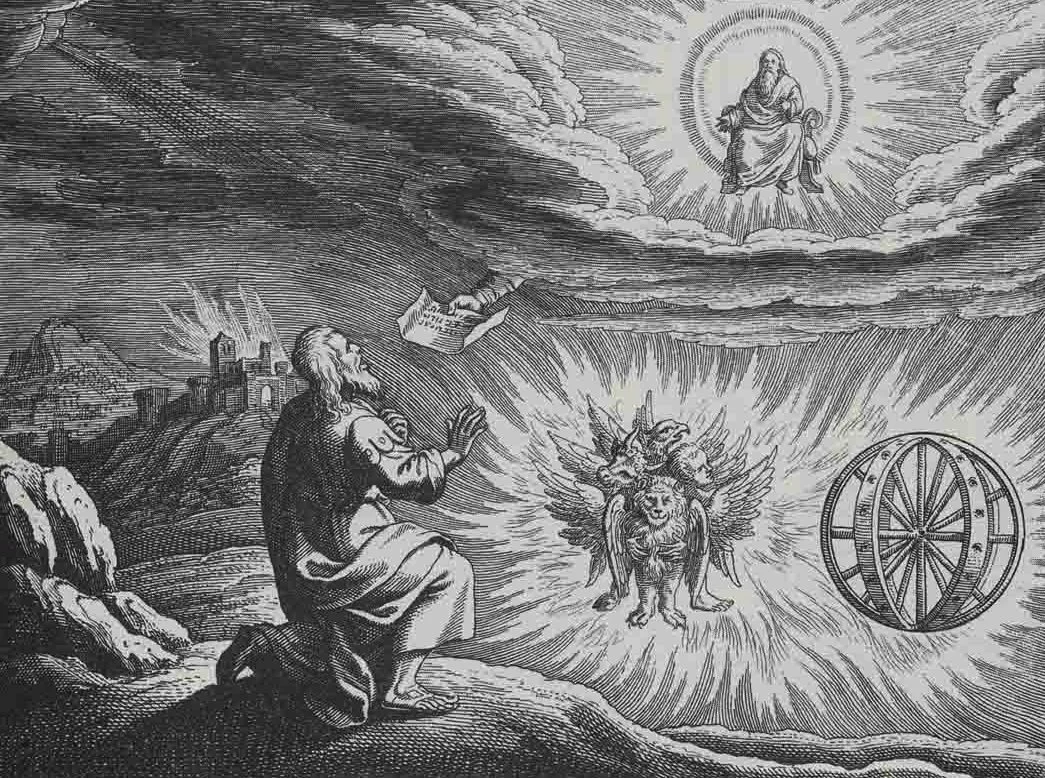
Ezekiel’s divine image of the Ophanim by Matthaus Merian circa 1670 and St. John the Baptist Church in Kratovo, North Macedonia.
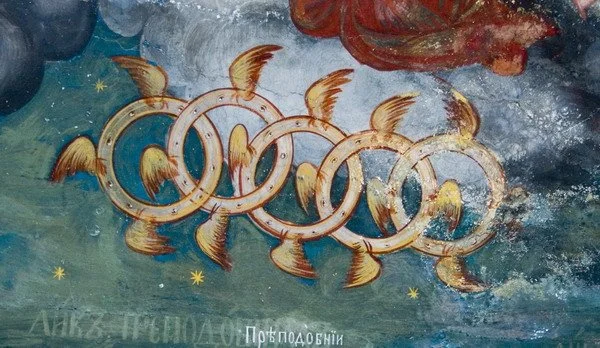
Merkavah is perhaps the first literature to deal with our current question: how now should humanity come to terms with the post-human cybernetic systems? They are Xenobeings, the Ophanim, liquidating human rationality and detecting irregularities in the system. Merkavah is claustrophobic, a sentiment all of us may understand as the anthropocene disintegrates in an automated messaging system. It mirrors the irrationality and authoritarian logic that traps the beauty of the human mind inside a closed system of feedback loops and recursive symmetry.
Ever-present and all-consuming question you are. How will we prevail against a cybernetic posthuman world? The question and anguish of humanity is how to deal with rivals that know no grace nor mercy.
The solution is Merkabah. To ride in the divine chariot and understand the teachings is to bring the Ophanim (cybernetic agent) under you and take it from opposition to dominion. It is the mastery of making the angel your protector rather than your aggressor. To understand these too is to come under the care of angels and their apotropaic garments.
“Then the Devil left, and behold, angels came and attended to Christ in the wilderness”
-The Gospel of Matthew
“Their garments were beautiful and shone like light “
Katabasis
Merkavah is a Katabasis, or descent literature. Κατάβασις is the Greek word that means descent, and is often describes the metaphysical journeys to the underworld, like in the Odyssey or The Divine Comedy. Practitioners of Merkavah navigate the heavenly realm by climbing down the ladder, descending down the vestibule of heavenly palaces. Why descent over ascent? Scholarship is unsure and divided, but the most popular belief is it’s a formality so as to not offend the nature of the divine. Who is that of the man who believes he may ascend to the throne room of God? So he must instead descend.
In some poetic twist of our own understanding, however, it is a descent into madness and heat. The mythscape of the Heaven in Merkavah is almost more like Hades. Where rivers of blood drain down from the hills of flame in Holy Fury.
“He has distinguished you from the attendants of the chariot. He who recites the name of one of you is a blazing fire, surrounding flame, encircling flame, glowing coals of fire, glowing coals of wind, gushing glowing coals of splendor, according to the word that is said, Holy, holy, Holy”
-Hekhalot Rabbati
It is a noble descent indeed.
Layers of heaven are a disruption as they agitate and have the dynamic horror only captured by John Martin’s paintings. To descend through various palaces towards the most holy orchard is to reach the divine throne room of God. Each layer becomes more filled with holy wrath as so only the most pure in spirit may descend by their faith.
“Their horses are horses of darkness, horses of deep darkness, horses of gloom, horses of fire, horses of blood, horses of hail, horses of iron, horses of the misty cloud. The horses upon which they ride standing over mangers Of fire filled with glowing juniper coals, and they eat glowing coals out of their mangers,about a measure of forty seas in one mouthful .And the measure of The mouth of every single horse is three times as much as the measure of the entrance of the managers of Caesarea. There are rivers of fire beside their mangers, and all their horses drink about the measure of the full canal of water that there is in the brooke Kidron, which brings out and unites all the rainwater of Jerusalem. A cloud is there above their heads, dripping blood above their heads and (those) of their horses. So this is the mark and character of the guardians of the entrance of the seventh palace, and such is the entrance of every single palace.”
-Hekhalot Rabbati
Cryogenics, storehouses of hail, the frozen swell of pipes underneath the data center provide ruin. Coldness be my God? The landscape of heaven is hot. Storehouses of lightning. Electricity moves through eruptions in static. Fire drips out the mouth of Ophanim.
“For no creature is able to approach within a hundred eighty-five thousand myriad parasangs of that place because of the tendrils of fire that
drip and go forth from the mouths of the cherubim and from the mouths of the ophanim and from the mouths of the holy living creatures who
open their mouths, saying, “Holy,”
-Hekhalot Rabbati
Drones drop aluminum powder and iron oxide themite(fire drips out the mouth of the Ophanim)
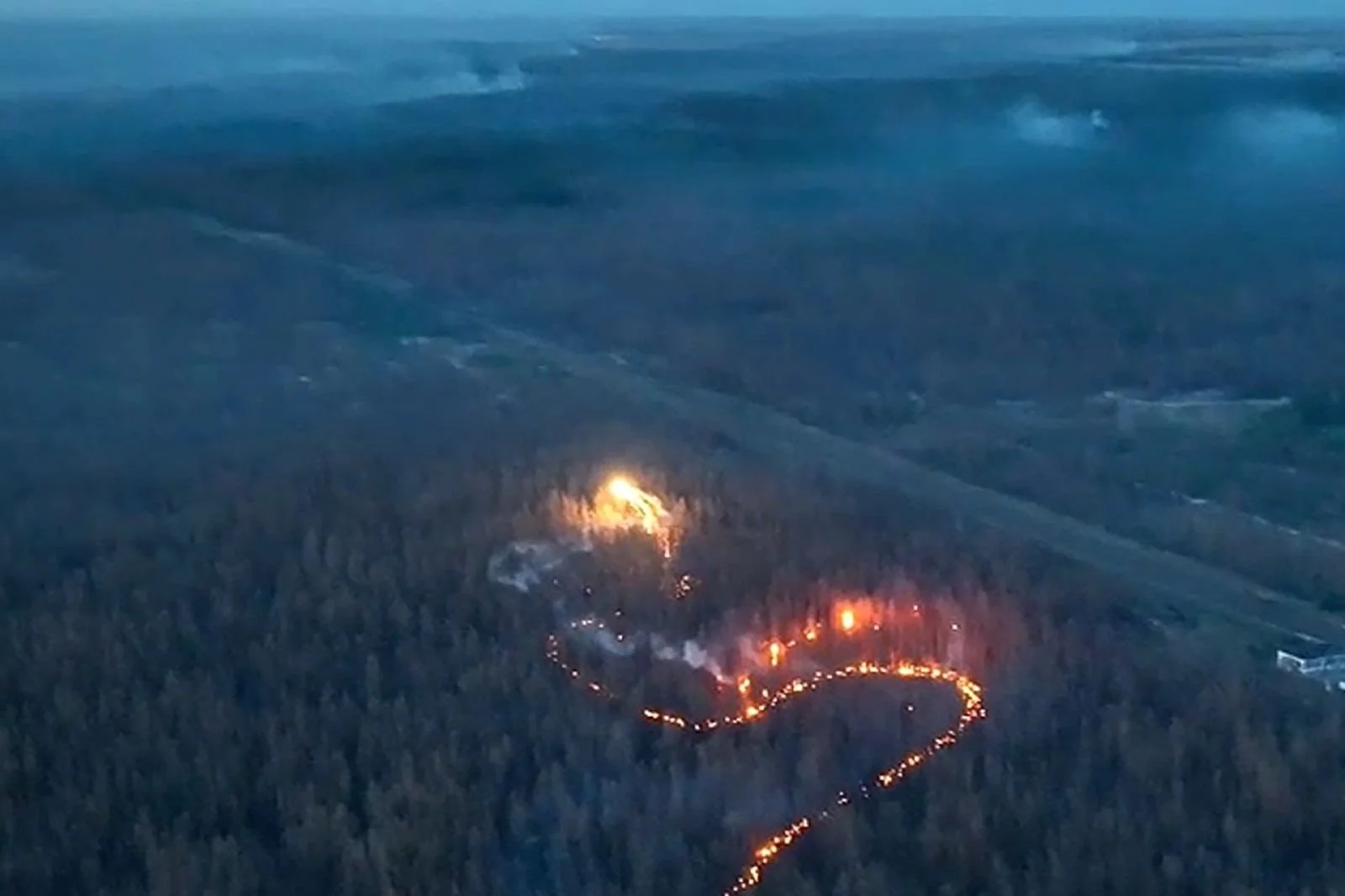
The imagery evokes the fiery lashes of the Pulsa Di Nura affair in the literature. An important apocryphal episode in reactionary Judaic literature of the post-Merkavah. In which the rabbi, Elisha ben Abuyah, descends to the throne room of God and mistakenly identifies the angel Metatron as God. Azrael, the angel of death, to punish them fittingly, proceeds to whip both with whips made of fire. These whips of fire are the Pulsa Di Nura. Still invoked today for various reasons today by those with darkness in their souls. One should be careful…the consequences are severe for those who ascribe the title of God to what is only a messenger, an angel. Norbert Wiener first wanted to ascribe cybernetics to the metaphor of the angel. Angelics was the name before switching to the Greek word κυβερνήτης, which means steersman.
Nobert Weiner’s theology is omnipresent in his work on cybernetics, and his intuition to title his research on the angel is part of his own faith and belief that Artificial Intelligence was profoundly not to be ascribed to the omnipotent and omnibenevolent nature of a higher power. For us to misunderstand what AI is and designate it as deity will have grave consequences for both theology, our own sanity, and progress. AI is a messenger, agent, or intermediary, and an angel mistaken for true divinity will unleash terrible consequences.
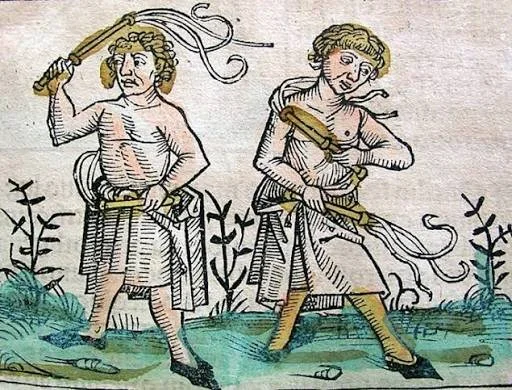
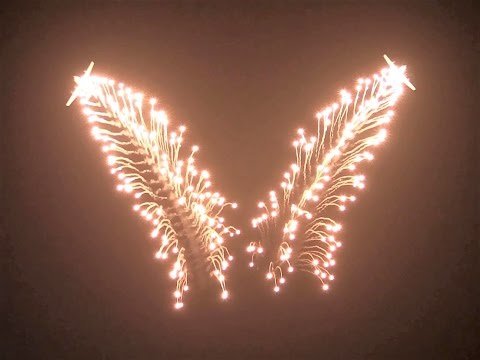
Thermal heat and infrared countermeasures (fiery lashes invoked by the angel of death, Azrael)
Our understanding of Katabasis is that it is much like our own journey, which humanity has chosen to embark on. That bleak path of Acceleration towards techno-singularity. That which many do not know. Accelerationism has been embraced by both left- and right-hand paths; it is the end of the status quo, and simultaneously a journey into chaos. It’s the only path we are on regardless of political belief. The levers have been pulled, and the machine has been started.
“This path is the blackest, but I guess it’s the soonest”
-Katy’s Song by Red House Painters
It’s a descent through madness that not all of us have chosen to take, but inevitably we all are going down it. Ideology of anti, pro, quasi is irrelevant in relation to accelerationism. This is no longer an opinion, but rather an event that is happening. Acceleration is happening, and we can’t keep up with the race. However what lies at the end of the descent into madness, may not be as bleak as the journey which we find ourselves on in this moment. At the end of our suffering, there may be a beautiful orchard with blossoms on each branch. And we may hope that in the throne room of God we may see the wicked judged for their crimes.
Understanding Merkavah as a framework is helpful for understanding the coming years. In Merkavah, through the divine scent of madness where the voices of angels strip the flesh from men, come little moments of relief. When one would pass safely through each gate, they would rejoice in hymns or songs.
“I pay the price for my sins, I’m at the gate, let me in”
-Perfect Violation by Bladee and VargTM2
To pass through the gate and find yourself free from the terror of the angels, it was necessary to follow the traditional torah or law. To abstain from sin and engage in a strict regiment of cleanliness was what was necessary to survive the Merkavah journey, and for us as well, this may be taken to heart. The angels smell your sin as surveillance state politics take hold. Take heed: angels are watching you, waiting for your moves to go against the law. These days it is better to abstain from sin, lest you find your gaze meeting an angel with eyes of electronic recording.
“Who by Fire, who by water
Who by very slow decay
Who shall I say is calling?”
-Who by Fire from New Skin for the Old Ceremony by Leonard Cohen
In Who by Fire by Leonard Cohen reinterprets Rabbi Ishamael’s (son of) Elisha’s prayer as he goes into heaven and hears the voice of the Ophanim. We understand from tradition that Rabbi Ishamael was also a Merkavah practitioner hoping to descend towards the divine throne. He went to have divine revelation like Ezekiel before him, and it is in song of the Ophanim that the hearts of men are torn against the earth. Where what is Holy delivers the presentation to the mortals who have walked very little yet expect very much. Where the teary-eyed and weary take refuge and shelter. In God’s voice comes a thin and silent whisper among rock-shattering wind. Ophanim's cries and songs erupt like fires from heaven down onto man.
The Song of the Ophanim :
There are no jet streams to scar the skyline
Skipping stones of fire on concrete. Charred
leaking pipes of the pre-industrial algorithm produce
Pagan rust is being collected and ground into a fine powder to be consumed as Neo-animism.
Cannibals, headhunters, pilgrims, all betting on
The same shallow talisman we have seen before.
The shaman is a purveyor of fine moral conduct.
Cut up three times. Cut again.
Re-Borroughs-re-modify-rec0nvene with the algorithm
Cut up three times. Cut again.
The Loa are in the attic of all the intelligence agencies
Cut up three times. Cut again.
It's the reminder that New Orleans will sink in one hundred years.
Southern Gothic sludge submerged under the Gulf of America.
America's last gentle reminder of aristocratic beauty will be lost to deluge.
She goes gentle.
Everything gets eaten by the bayou, the swamp,
the water which wants to be land.
You can’t hide from the maelstrom in the cove.
Shipwrecks for 100 years.
There is a beach on Oregon’s coast where all the wastes of Charybdis wash up.
Simone Weil says the sea is not less beautiful in our eyes because we know that sometimes ships are wrecked by it,
but that’s hard to say when your dead man's cove and the skeletons of hulls are standing over you.
100 miles north of the gold mine
I fly above a remote part of Yukon.
Where the fires have burned and taken the land
Global warming takes the garden in embers
And the trees’ husks fall over in the wind
And line the soil like a pile of metallic hay.
Glimmering bare, stripped of all their bark
The ground is a bed for us all
And its covers are blankets of needles and ash.
The mountains melt like wax. The earth is wholly broken.
We all return to dust and ash, to become the possessions of fleas
The wares they present at their circuses
Father, into your hands I commend my spirit
The tapes will go till they decompose
And then there is Nick Land grinning and telling you to open the necronomicon. Whatever bro
In the wake of my own anxiety of the future and accelerationism, I have come to accept this as reality, but also with hope. The field is on fire, and the Nephilim are offering gifts to men of impure hearts; yet I also continue to have faith. We must push to imagine a future, even when our own past traditions and way of life are forever lost. Ye who have little faith. I have hope even amongst these bleak admissions.
“I believe like a child that suffering will be healed and made up for, that all the humiliating absurdity of human contradictions will vanish like a pitiful mirage like the despicable fabrication of the impotent and infinitely small Euclidean mind of man, that in the world's finale, at the moment of eternal harmony, something so precious will come to pass that it will suffice for all hearts, for the comforting of all resentments, for the atonement of all the crimes of humanity, for all the blood that they've shed; that it will make it not only possible to forgive but to justify all that has happened.”
-Fyodor Dostoevsky, The Brothers Karamazov
Xeonconstruct
This brings me to the xenoconstruct.
A XENOCONSTRUCT WHICH ALLOWS FOR FLUID MOVEMENT WHILE RETAINING A CONTINUED UNIFORM VISION AND ETHOS. EQUATING THE INTERNET AS A CHANNEL OF THE OUTSIDE, which produces the XENOCONSTRUCT.
Xeno as a suffix in relation to cybernetics (and the work of Mark Fisher and Nick Land) refers to the movement of things inhuman amongst the humans. Xenogenesis-The emergence and creation of nonhuman systems from other nonhumans. Xenosystems- systems from the outside. Both concepts are wrought with doom, gloom, and existential anxiety.
But Xenoconstruct is rather that of a philosophy or theology of hope. Just as the outside may breed systems that trap, lure, and entangle men. It may also bring constructs that free them.
Posthuman Architectures that may create systems from the outside that free from the oppression of capitalism. The notion that this techno singularity event is eschatology is primitive and naive. It certainly is an event, but one that also requires hope because fortunately (or unfortunately for the prozac stuffed doomers) humanity will prevail. And so one must imagine how the outside may break our chains as well. That which binds you is also what frees you
After the deconstruction of postmodernism comes the xenoconstruction of cybernetics. The temple is torn down, and the bricks lie in disarray in the grass. In order to rebuild an order, we receive divine instructions from the outside.
“Jesus answered and said unto them, ‘Destroy this temple, and in three days I will raise it up.”
-The Gospel of John
That is what the xenoconstruct is, and this all is xenoconstruct as well and represents a living one. Ophanim (this interdisciplinary project) is a xenoconstruct, in that it is a rejection of the traditional fashion collection-based model in anticipation of a more interdisciplinary conceptual work that is free from the constraints placed on the seasonal collection model. A way to continue a uniform vision while unrestrained by the time of presentation. Only possible because of the cybernetic architectures of the outside.
“Ophanim” is a conceptual clothing collection unfolding and unmasked slowly as a Xenoconstruct.
Shi'ur Qomah and Iconometry
The application to fabric and garments speaks here.
Once Merkavah practitioners made it through the fires of heaven they encountered at the end the Throne Room of God. The glory and exaltation that can be met with the honor that was measuring the Throne of God. The Throne of God was made to his exact specification, tailored, so that the descenders could then receive and know God’s holy measurements.
This concept of the study of divine measurements is called iconometry. Elaborate mystical anatomy of the divine, and for Merkavah specifically it was called Shi'ur Qomah(Measure of the Body).
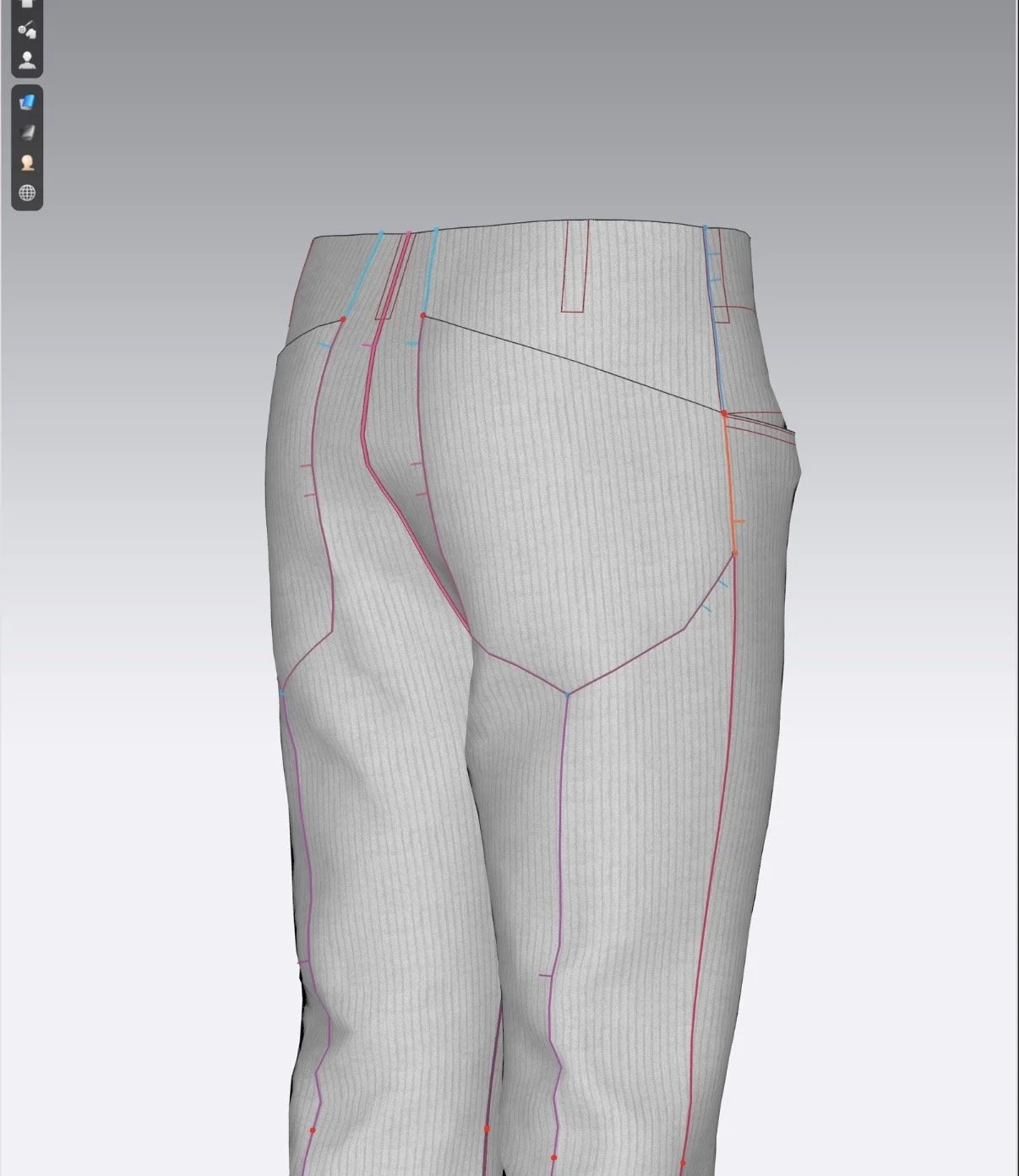
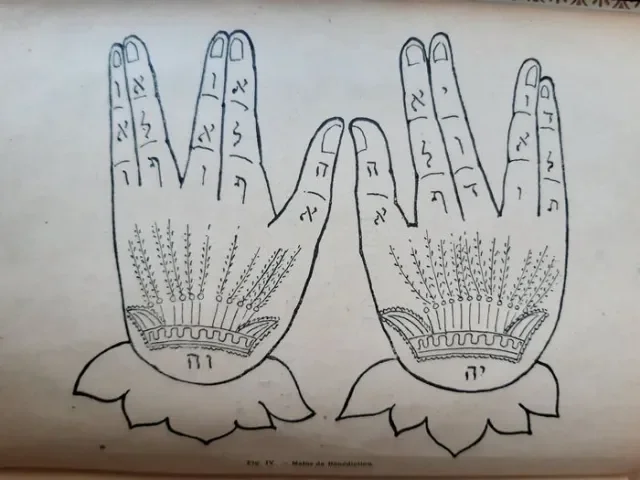
This obsession with holy measurements of God’s body and proportion is one I have related to, as I have spent the last year refining fit and proportion in the garments I produce. Design of garments became something of iconometry, though usually reserved for the crafting of icons or statues. Craft and the specificity of it have become some mystic form of industrial design. For me, the proportions and fit of the garments I produce have become iconometry, giving my hands more deliberate standards for fit. All things intentional and holy. This is the principle that guides the clothes themselves, along with the apotropaic.
This document will continuously be altered. It shall be expanded.
“Look, its chest moves up and down. It breathes shallow breaths.”
“And he saith unto me, Seal not the sayings of the prophecy of this book: for the time is at hand”
-Revelation 22:10